
AI in Education: What Parents and Teachers Need to Know

Remember when "artificial intelligence" sounded like something straight out of a sci-fi movie? Well, here we are in 2025, and I'm asking my phone's assistant to set reminders while Netflix somehow knows I'm in the mood for true crime documentaries again. AI isn't coming anymore—it's already here, and it's quietly reshaping how we learn.
I've been thinking about this a lot lately, especially after watching my younger cousin struggle through high school chemistry while using some of these new AI study tools. The whole education system we grew up with—everyone learning the same stuff at the same pace—it worked for some people, sure. But let's be honest: how many of us spent entire semesters feeling either bored out of our minds or completely lost?
What's Actually Different Now
The Personal Tutor Thing is Real
Here's what blew my mind: these AI platforms can actually figure out where you're struggling and adjust on the fly. My cousin was using this app called Prepma to memorize polyatomic ions, and when she kept getting polyatomic ions wrong, it just... gave her more practice with those specific ones. No teacher had to notice, no embarrassing questions in front of the class. The system just quietly helped her catch up.
It's like having a tutor who never gets tired, never judges you for asking the same question three times, and doesn't cost $50 an hour.
For students: This means you can finally learn at your own pace without feeling left behind or held back. If you need to review fractions for the tenth time before tackling algebra, the AI won't sigh dramatically like your math teacher might.
For teachers: This is actually liberating. Instead of spending hours creating different versions of the same worksheet for students at different levels, AI can handle the differentiation while you focus on the human stuff—motivating, inspiring, and connecting with your students.
Making Study Materials Isn't a Pain Anymore
I remember spending entire weekends making flashcards by hand. (Yes, I'm that old.) Now? You can literally upload your textbook chapter and get flashcards, practice questions, and summaries in minutes.
The crazy part is how good they've gotten at this. I tested it with some old college materials, and the AI-generated questions were actually harder than what I used to come up with myself. Sometimes I wonder if I should be impressed or slightly concerned about being outsmarted by a computer.
What this means for busy teachers: My friend Sarah, who teaches 9th grade biology, used to spend her entire Sunday afternoon creating quiz questions. Now she uploads her lesson materials to an AI platform, gets a variety of question types in minutes, then spends that freed-up time actually reviewing student work and planning engaging activities. She told me it's given her back her weekends.
Learning Doesn't Have to Be Boring
Look, I'm not saying gamification is revolutionary—we've all seen those "educational" apps that were more game than education. But when it's done right, it actually works. My cousin showed me these matching games for chemistry formulas, and I found myself playing them longer than I'd care to admit. There's something satisfying about getting instant feedback and watching your score improve.
The competitive exam prep tools are where this stuff really shines. If you're studying for the GRE or GMAT, having AI create practice tests that adapt to your weak spots? That's genuinely useful.
The Problem-Solving Revolution
This is where things get interesting. Remember struggling with a math problem and having to wait until office hours or the next class to get help? AI tutors don't sleep. They don't have office hours. And they actually explain their reasoning step-by-step.
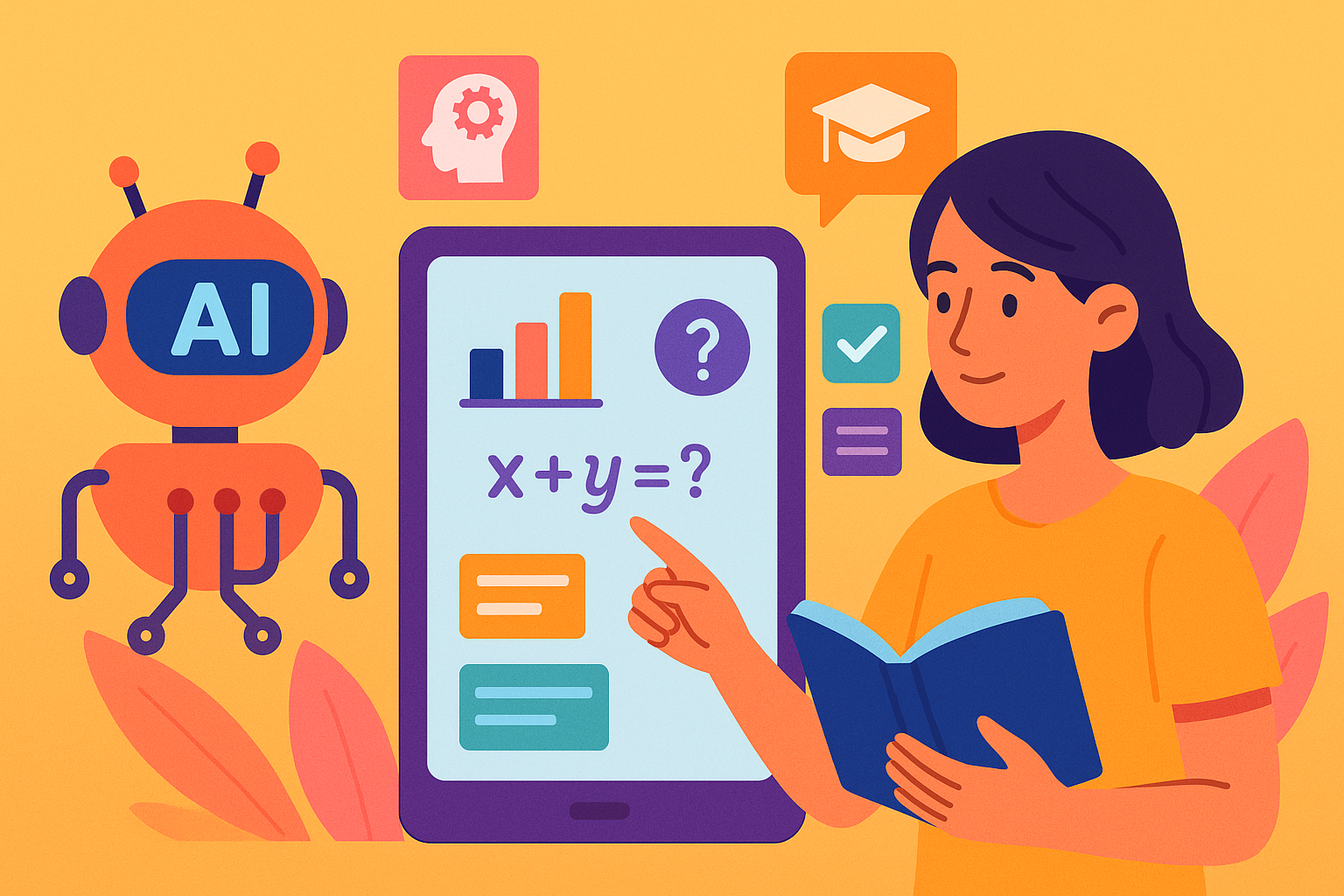
I tried out some of Prepma's Logical reasoning questions, and the explanations were... actually better than what I got from some human teachers. More patient, more thorough, and available at 2 AM when I'm randomly motivated to study.
But here's the thing—and this is important—these explanations are only as good as the AI behind them. I've caught a few mistakes, especially in more complex topics. So while it's incredibly helpful, you still need to think critically about what you're being taught.
Real-World Applications Students Are Using Right Now
Let me share what I've observed from talking to students and teachers:
Language Learning: My neighbor's daughter is learning Spanish with an AI conversation partner that never gets impatient with her pronunciation. She's more confident speaking now because she can practice without judgment.
Math Problem Solving: Instead of just getting the answer, students can ask AI to walk through each step, explain why a method works, or even show alternative approaches to the same problem.
Writing Assistance: Not to write for them (that's cheating), but to brainstorm ideas, suggest improvements, or help organize thoughts. One student told me AI helped her understand why her essays felt disjointed—it pointed out her transitions were weak.
Research Skills: AI can help students learn to ask better questions, understand complex topics by breaking them down, and even fact-check information they find online.
The Teacher's Perspective: What's Really Happening in Classrooms
I've talked to about a dozen teachers in the past few months, and their experiences are fascinating. Here's what they're telling me:
The Time-Saver Reality
"I can create differentiated worksheets in five minutes instead of spending my prep period doing it by hand," says Maria, a middle school math teacher. "But the real win is that I can focus on walking around the classroom, having actual conversations with students, instead of being buried in administrative tasks."
The Assessment Revolution
Teachers are using AI to create more varied and challenging assessments. Instead of the same multiple-choice test every semester, they can generate different versions that test the same concepts in fresh ways. This cuts down on cheating and keeps students from just memorizing last year's test. I was checking out coding decoding questions and was amazed with variety, depth and breadth these AI platforms offer.
The Professional Development Opportunity
Several teachers mentioned using AI to improve their own skills. One English teacher uses it to generate discussion questions for novels she's teaching for the first time. A science teacher asks AI to help explain complex concepts in simpler terms for her struggling students.
But There Are Challenges Too
"Sometimes I worry my students are becoming too dependent on it," admits David, a high school physics teacher. "They'll ask AI for help before they even try to work through a problem themselves."
And there's the grading dilemma. How do you assess students when AI can help them write essays or solve problems? Teachers are having to get creative, focusing more on understanding and application rather than just getting the right answer.
The Student Experience: What They're Actually Saying
I spent time talking to students from middle school through college. Here's what surprised me:
The Confidence Boost
"I don't feel stupid anymore when I don't understand something in class," says Alex, a high school junior. "I can ask the AI the same question ten different ways until it clicks, and nobody knows I needed extra help."
This is huge. The number of students who told me AI helped them feel less embarrassed about their learning struggles was genuinely touching.
The Study Habit Changes
Students are studying differently now. Instead of passive reading or rote memorization, they're having conversations with AI about the material. "I argue with ChatGPT about history interpretations," one college student told me. "It makes me think deeper about what I'm learning."
The Motivation Factor
Several students mentioned that AI makes studying feel less isolating. When you're stuck on calculus at midnight, having an AI tutor that can encourage you and break down problems makes the difference between giving up and pushing through.
Why This Matters More Than You Think
The democratization angle is huge, though I hate using that word because it sounds so corporate. But seriously—a kid in rural Montana can now access the same quality study materials as someone at an elite prep school in Manhattan. That's not nothing.
I grew up in a small town where the closest tutoring center was an hour away. If these tools had existed then, my entire academic trajectory might have been different. That's both exciting and a little heartbreaking when I think about all the potential that went untapped simply because of geography.
The Equity Question
But here's what's keeping me up at night: what about students who don't have reliable internet or devices? Are we creating a new kind of digital divide where AI-assisted students pull even further ahead?
I talked to a teacher in a Title I school who said half her students don't have consistent internet access at home. While their wealthy counterparts are getting AI tutoring, these kids are still struggling with the same old resource limitations.
The Stuff That Worries Me
Let's talk about the elephant in the room: are we making students too dependent on AI? I've seen kids who can't solve a problem without immediately asking an AI for help. There's a difference between using AI as a study aid and using it as a crutch.
And don't get me started on data privacy. These platforms know everything about how you learn, what you struggle with, how long you spend on each question. That's incredibly valuable data, and honestly, I'm not sure we're being careful enough with it.
The quality control issue is real too. AI can confidently give you the wrong answer, and if you don't know enough to spot the mistake, you're stuck. I've seen AI-generated practice questions with subtle errors that could genuinely confuse students.
The Academic Integrity Minefield
This is where it gets complicated. Where's the line between AI assistance and cheating? I've heard stories of students using AI to write entire essays, but I've also seen students use it legitimately to brainstorm ideas or check their grammar.
Teachers are scrambling to figure out new policies. Some ban AI entirely (good luck enforcing that). Others are trying to integrate it thoughtfully. The smartest approach I've seen is teaching students when and how to use AI appropriately—treating it like learning to use a calculator or conducting internet research.
The Critical Thinking Concern
My biggest worry? Students might stop thinking for themselves. If AI can answer any question instantly, what happens to the struggle that builds real understanding? There's value in wrestling with a difficult concept, in being confused and working through it.
One philosophy professor told me she's noticed students are less comfortable with ambiguity. They want AI to give them "the answer" to complex ethical questions that don't have simple answers.
What Parents Need to Know
I've been getting a lot of questions from parents who feel lost in all this. Here's my honest advice:
Don't Panic, But Stay Involved
AI in education isn't inherently good or bad—it's a tool. Just like you wouldn't hand your kid a car without teaching them to drive safely, you shouldn't let them use AI without some guidance.
Have conversations about when AI help is appropriate and when it's not. Help them understand the difference between using AI to learn and using AI to avoid learning.
Set Some Boundaries
Some families I know have "AI-free homework time" where kids have to try solving problems on their own first. Others review AI-generated work with their children, asking questions like "Do you understand this?" and "Could you explain this to someone else?"
Embrace the Positives
If your kid is struggling in math and AI tutoring helps them finally "get it," that's wonderful. If they're using AI to explore topics they're passionate about, even better. The key is making sure they're actively learning, not passively consuming.
What's Coming Next
The future stuff sounds almost too good to be true. AI that can read your facial expressions to know when you're confused? Learning systems that adapt not just to what you get wrong, but to your mood and energy level? Virtual reality classrooms?
Honestly, part of me is excited, and part of me wonders if we're solving the right problems. Sometimes I think the issue with education isn't the technology—it's class sizes, funding, and treating teachers like they're disposable.
The Practical Near-Term Changes
Here's what I expect to see in the next couple of years:
Smarter Adaptive Learning: AI that doesn't just notice you got a question wrong, but understands why you got it wrong and adjusts accordingly.
Better Teacher Tools: AI that can analyze student work and give teachers insights about learning gaps across their entire class, not just individual students.
More Sophisticated Plagiarism Detection: As students get better at using AI, schools will get better at detecting inappropriate use.
Integrated Learning Ecosystems: Instead of separate apps for flashcards, practice tests, and tutoring, we'll see comprehensive platforms that handle everything in one place.
Making It Work: Practical Strategies
After talking to all these teachers and students, here are the strategies that seem to be working:
For Students:
Try first, then ask: Attempt the problem on your own before turning to AI
Explain it back: If AI helps you solve something, try explaining the solution to someone else
Question the AI: Don't accept everything at face value—ask follow-up questions and verify important information
Use it to go deeper: Instead of just getting answers, use AI to explore related concepts and connections
For Teachers:
Start small: Pick one specific way to integrate AI rather than trying to revolutionize everything at once
Be transparent: Tell students when you're using AI and discuss appropriate use
Focus on skills AI can't replace: Critical thinking, creativity, collaboration, and communication become even more important
Update your assignments: Design projects that require original thinking and can't be completed by AI alone
For Parents:
Stay curious: Learn about the AI tools your kids are using
Ask good questions: "What did you learn?" is better than "Did you use AI?"
Model good behavior: Show kids how you use AI tools appropriately in your own work
Keep communication open: Make it safe for kids to tell you when they're struggling or when they've made mistakes
My Take
AI in education isn't magic, but it's not just hype either. It's a tool, and like any tool, its value depends on how you use it. For students preparing for competitive exams or trying to catch up in difficult subjects, platforms like Prepma can be genuinely life-changing.
But—and this is crucial—it works best when it supplements human teaching, not replaces it. The best learning experiences I've had still involved real conversations, debates, and that moment when a teacher helps you see something in a completely new way.
AI can create flashcards and grade quizzes, but it can't inspire you to love learning. It can explain formulas, but it can't share the story of how those formulas changed the world. It can adapt to your learning style, but it can't challenge you to develop a new one.
The future of education isn't human versus AI—it's humans and AI working together to create something better than either could manage alone. And honestly? I think we're just getting started.
The key is remembering that education is fundamentally about human development. AI can make learning more efficient, more personalized, and more accessible. But the goal isn't to create students who are good at interacting with AI—it's to create thoughtful, capable, creative human beings who can use all available tools, AI included, to solve problems and make the world better.
That's a future worth working toward.